How to Specify Artificial Plants: A Checklist for Interior Designers

Specifying artificial plants for a commercial project seems straightforward until it isn't. A hotel lobby installation that sails through design approval can hit complications at fire inspection, installation day, or — worst of all — three years into the project when the foliage begins to fade. Most of those complications are preventable with the right questions asked at the right stage.
This checklist covers the five areas that matter most when specifying artificial plants for a commercial project: fire certification, material grade, scale, vessel specification, and supplier vetting. Work through it before you commit to any order and you'll eliminate the most common sources of specification failure.
1. Fire Certification
This is non-negotiable for any commercial installation and should be the first question you ask any supplier — before discussing species, scale, or price.
Fire certification checklist:
- What fire standard applies to your project jurisdiction? (US: NFPA 701; EU: EN 13501; China: GB 8624 B1; UK: BS 5867)
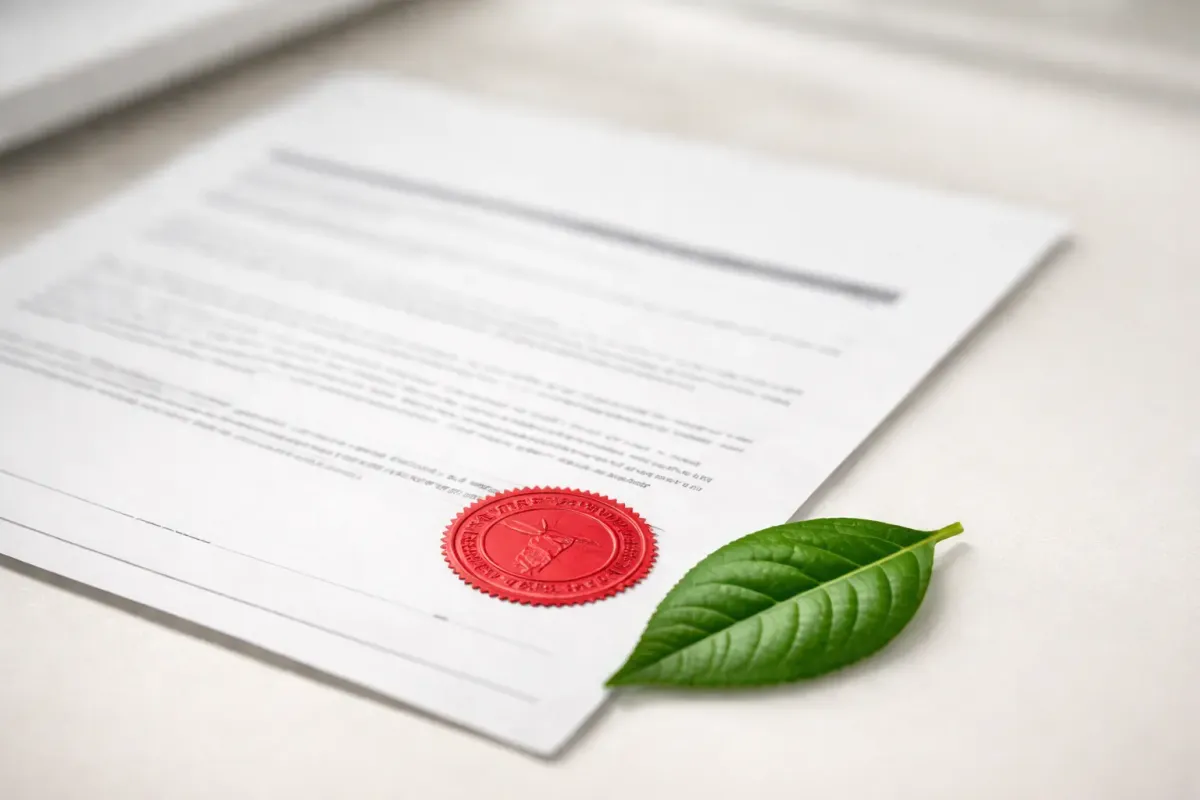
- Does the supplier have current third-party lab certificates for the specific products you're ordering? Ask to see the actual certificate — not a claim.
- Is the fire retardant integrated into the material compound or applied as a surface treatment? (Compound lasts the life of the product; surface treatments degrade.)
- Does the certificate identify the specific product and batch, or is it a blanket certificate for a product category?
- What is the certificate date? Fire inspectors increasingly query certificates older than 3–5 years.
If a supplier cannot produce a third-party lab certificate for the specific product you're ordering, treat that as a hard disqualifier for any commercial project. Surface-spray "fire-retardant" claims on residential-grade products will not satisfy a commercial fire inspector.
2. Material Grade
The material specification determines whether the installation looks credible to guests and clients at close range — which is ultimately the point of the entire exercise.
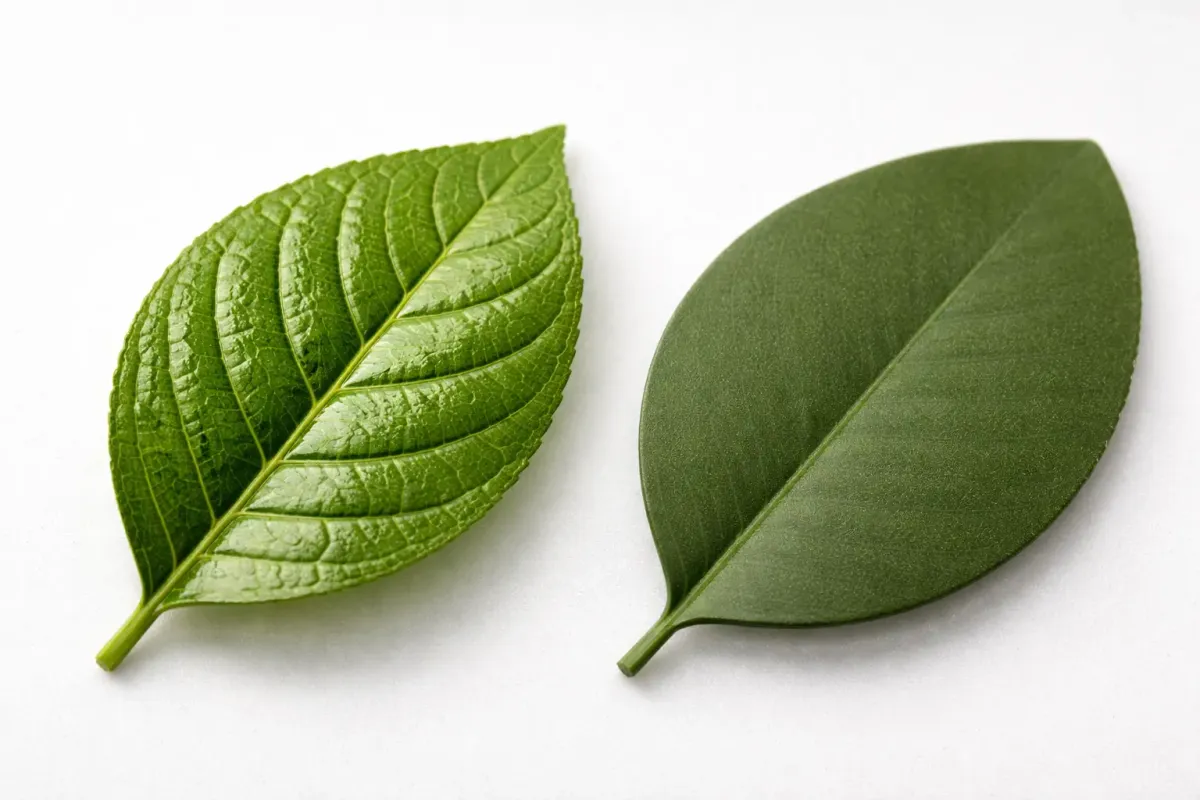
- PE (polyethylene) vs PVC: For any installation where guests or clients engage with the space at close range, PE foliage is the commercial standard. PVC reads as artificial at 1–2 metres. PE reads as natural at arm's length.
- Trunk and stem material: Natural wood trunks (for trees) should be real wood, shaped and sealed — not moulded plastic. PE or metal stems should be powder-coated or UV-stabilised for longevity.
- Outdoor vs indoor grade: If any element of the installation is in direct sun or exterior conditions, confirm UV stabiliser specification. UV rating is not standardised — ask for specific lifespan data under your climate conditions.
- Request samples: For any significant order, request physical leaf samples before committing. No amount of photography substitutes for seeing and feeling the material in person.
3. Scale and Proportioning
Underscaling is the most common design error in artificial plant specification. A single 4ft tree in a hotel lobby with 5m ceilings has essentially no visual impact. Effective installations require plants sized and proportioned to the architectural space — which means working from dimensions, not approximations.
- Provide ceiling height and floor plate dimensions to your supplier before selecting sizes. A reputable supplier should be able to recommend appropriate scale from these alone.
- For statement trees, a general rule: tree height should be at least 50–60% of the ceiling height to read as intentional rather than incidental.
- For green wall panels, coverage below 6–8 sq m in a normal-sized commercial space typically fails to create the immersive effect that makes green walls effective. Measure the target wall and specify accordingly.
- Consider canopy spread as well as height. A tall, narrow tree in a wide lobby creates an awkward vertical accent rather than a presence. Specify canopy diameter alongside height.
- For multi-species groupings, request a scaled layout drawing showing species, heights, and vessel positions relative to the space plan before approving the specification.
4. Vessel and Installation
Vessels are frequently under-specified — treated as a detail rather than a design decision. They're visible in every guest photograph and form the base visual relationship between the plant and the architecture.
- Indoor vessels: Specify material (fibreglass, ceramic, concrete-look resin, metal) to match the interior palette. Fibreglass is the most practical for large specimens — it's lightweight, durable, and available in any finish.
- Outdoor vessels: Must be frost-resistant, UV-stable, and thermally stable. Avoid ceramic outdoors in climates with freeze-thaw cycles. Fibreglass or rotomoulded PE are typically best.
- Weight and stability: Tall specimens require ballasted bases. Confirm that vessels are appropriately weighted for the plant height — a 10ft palm in a lightweight resin pot is a liability.
- Installation access: Confirm that the assembled plant and vessel will fit through all relevant doorways, lift dimensions, and access points. We've seen $20,000 installations delayed because a 12ft palm couldn't fit in the service lift.
- Floor protection: Large specimens on hard floors typically require felt pads or base platforms to prevent scratching and allow cleaning underneath.
5. Supplier Vetting
The artificial plant market ranges from premium PE manufacturers to importers of commodity residential-grade products. The price difference between them is real, but it's not always obvious from product photography alone. These questions help distinguish serious commercial suppliers from those who will underdeliver.
- Do they manufacture or import? Factory-direct manufacturers can make custom adjustments — height, canopy spread, foliage density — that importers cannot. For large or complex projects, factory-direct access is often critical.
- Can they provide project references in similar commercial contexts? A supplier with extensive residential experience is not necessarily prepared for commercial specification requirements.
- What is their lead time, and what happens if production is delayed? Commercial projects have fixed installation windows. Understand the delivery commitment before the order is placed.
- What does warranty cover? Understand exactly what is and isn't covered — UV fading, physical damage, manufacturing defects — and for how long. Get it in writing.
- Can they provide samples of the exact products before the order ships? For large orders, pre-shipment samples should be standard. Any supplier who resists this is worth approaching with caution.
"The right supplier should welcome every question on this list. If they're deflecting on fire certificates or resistant to sending samples, that's the answer." — LaySun project team
If you're working on a commercial project and want a supplier who can walk through this checklist with you directly, request a quote from LaySun. We'll respond within 24 hours with product recommendations, sizing guidance, and available special-order fire-rating options and applicable documentation requirements.
Need a supplier that ticks every box on this list?
LaySun provides applicable special-order fire documentation upon request, PE material grades, full-size customisation, and factory-direct pricing.
View Product Catalogue Our Quality Standards Request a Quote →