UV Protection Guide for Outdoor Commercial Plants

Visual proof of what UV exposure does to unprotected artificial plants — and how the right materials prevent it. Free guide for hotels, restaurants, and commercial outdoor spaces.

Visual Evidence

See the Difference UV Protection Makes
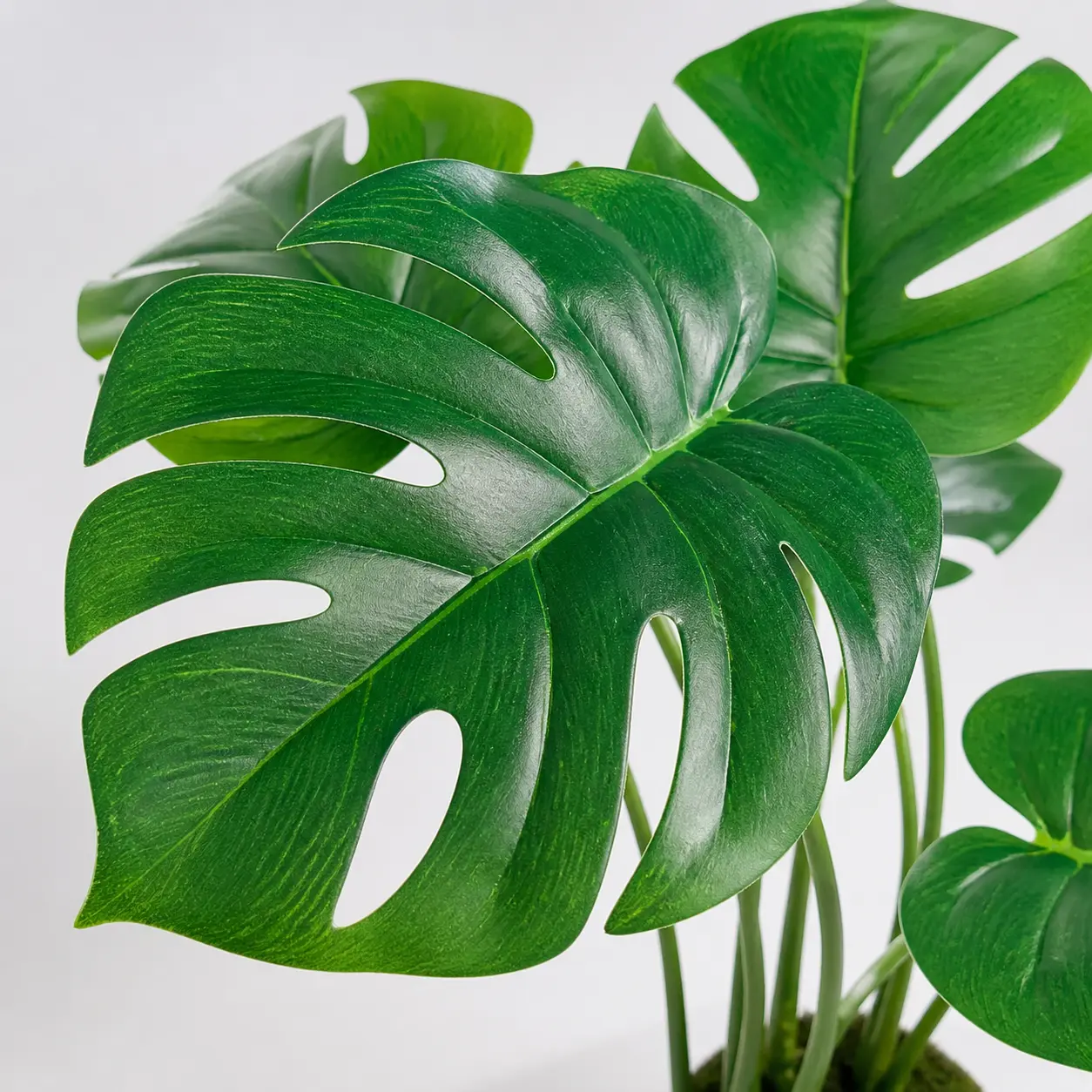
UV-protected HDPE artificial monstera plant with deep vibrant green leaves — full color and structural integrity retained after two years of direct sun exposure
LaySun HDPE Vibrant color · Full structural integrity · 2 years direct sun
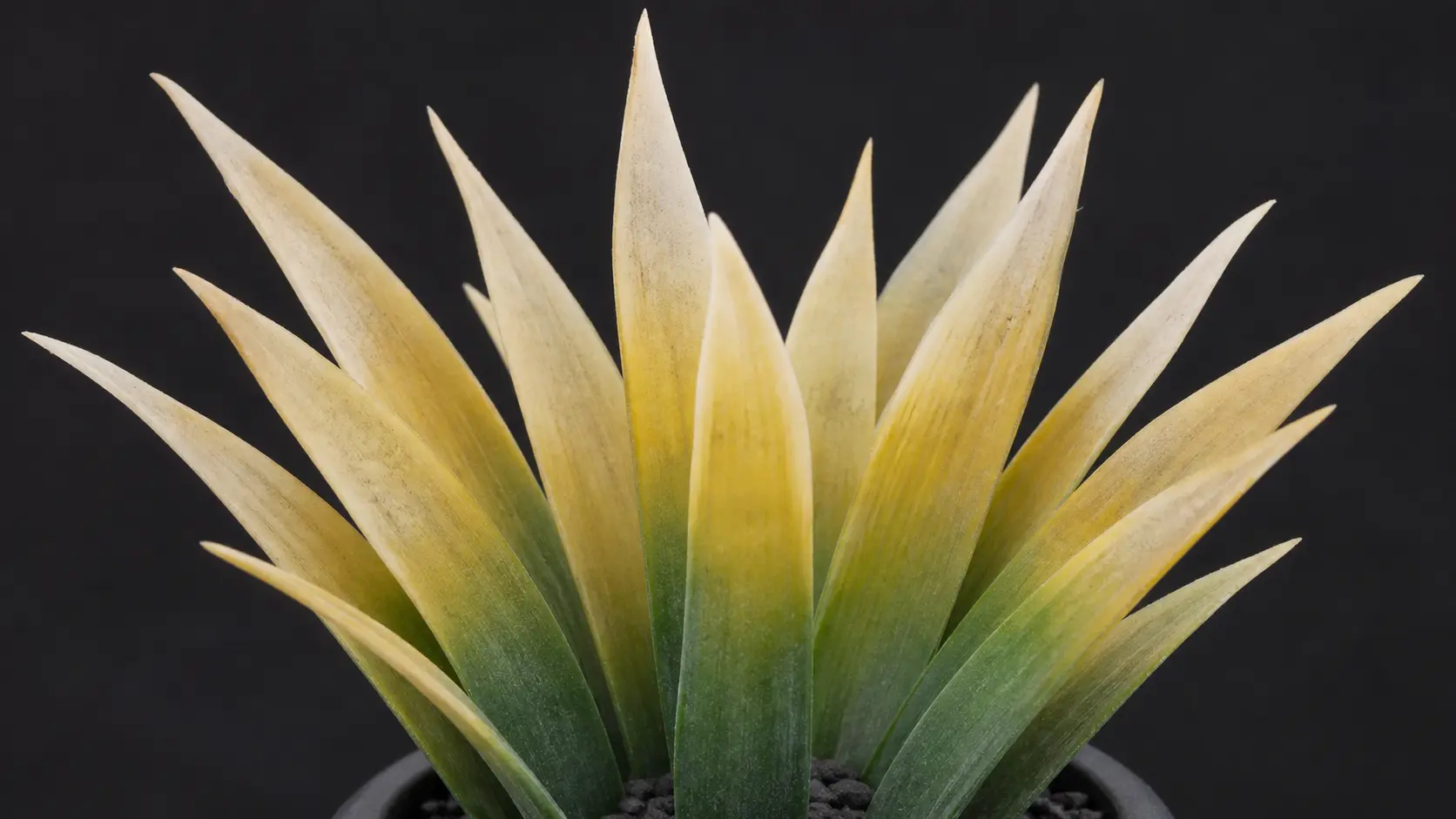
Artificial plant showing UV damage — tips bleached yellow-white while base remains green, classic tip-to-base UV fade pattern
Standard Plastic Faded · Brittle · Discolored · Only 1 year in

Color Retention Over Time — UV-Protected vs Standard

Standard Plastic
Now
6 mo
1 yr
2 yrs
LaySun HDPE
Now
6 mo
1 yr
2 yrs
Original color Standard plastic after 2 years LaySun HDPE after 2 years
Material Comparison

Not All Artificial Plants Handle Sun the Same Way

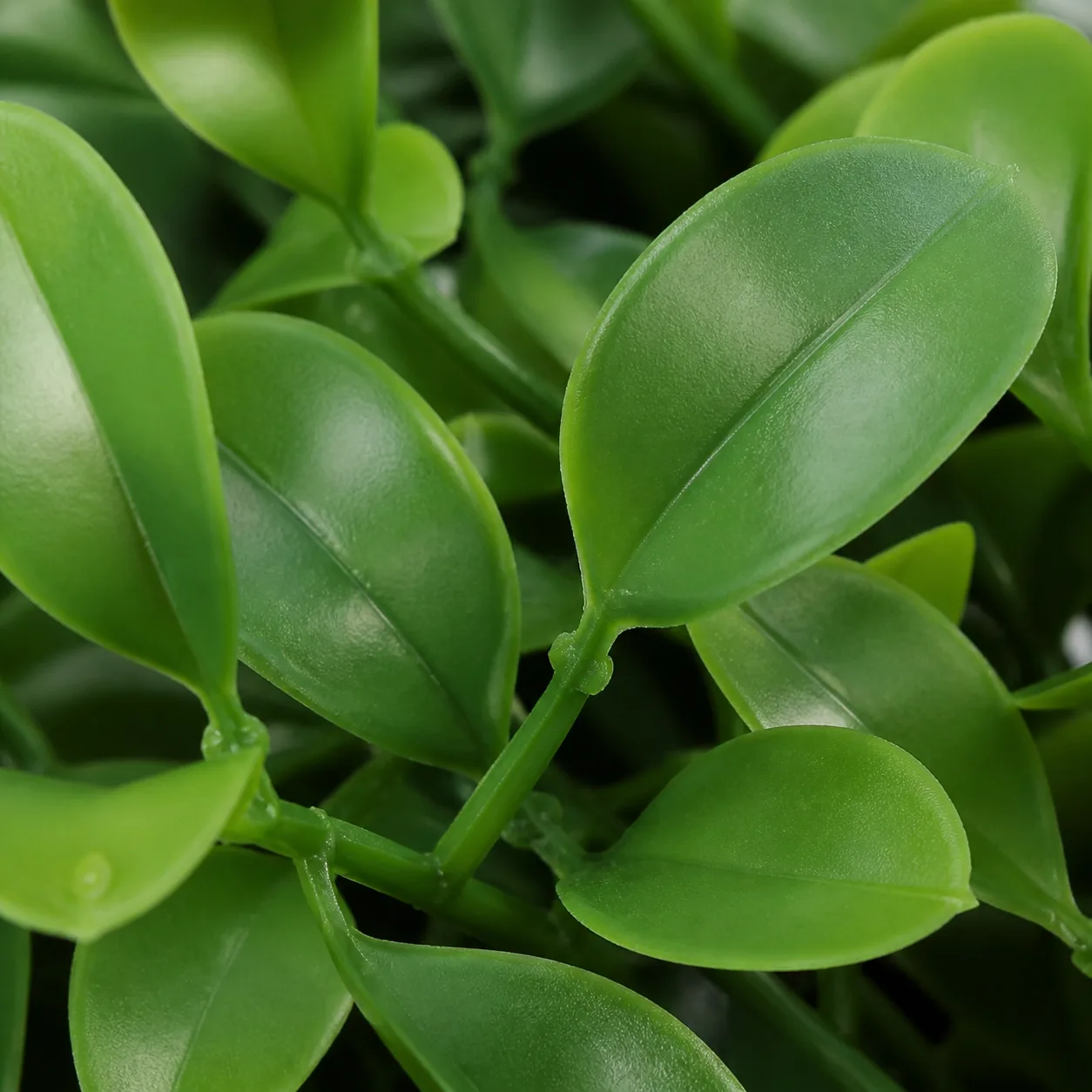
Close-up of UV-stabilized HDPE artificial plant leaves — smooth, vibrant green surface with no fading or surface cracking, demonstrating superior UV resistance

UV-Stabilized HDPE

High-density polyethylene with UV inhibitors built into the molecular structure. Color is stable for 5+ years in direct sun. LaySun's standard for all outdoor commercial products.

★★★★★ 5+ year lifespan
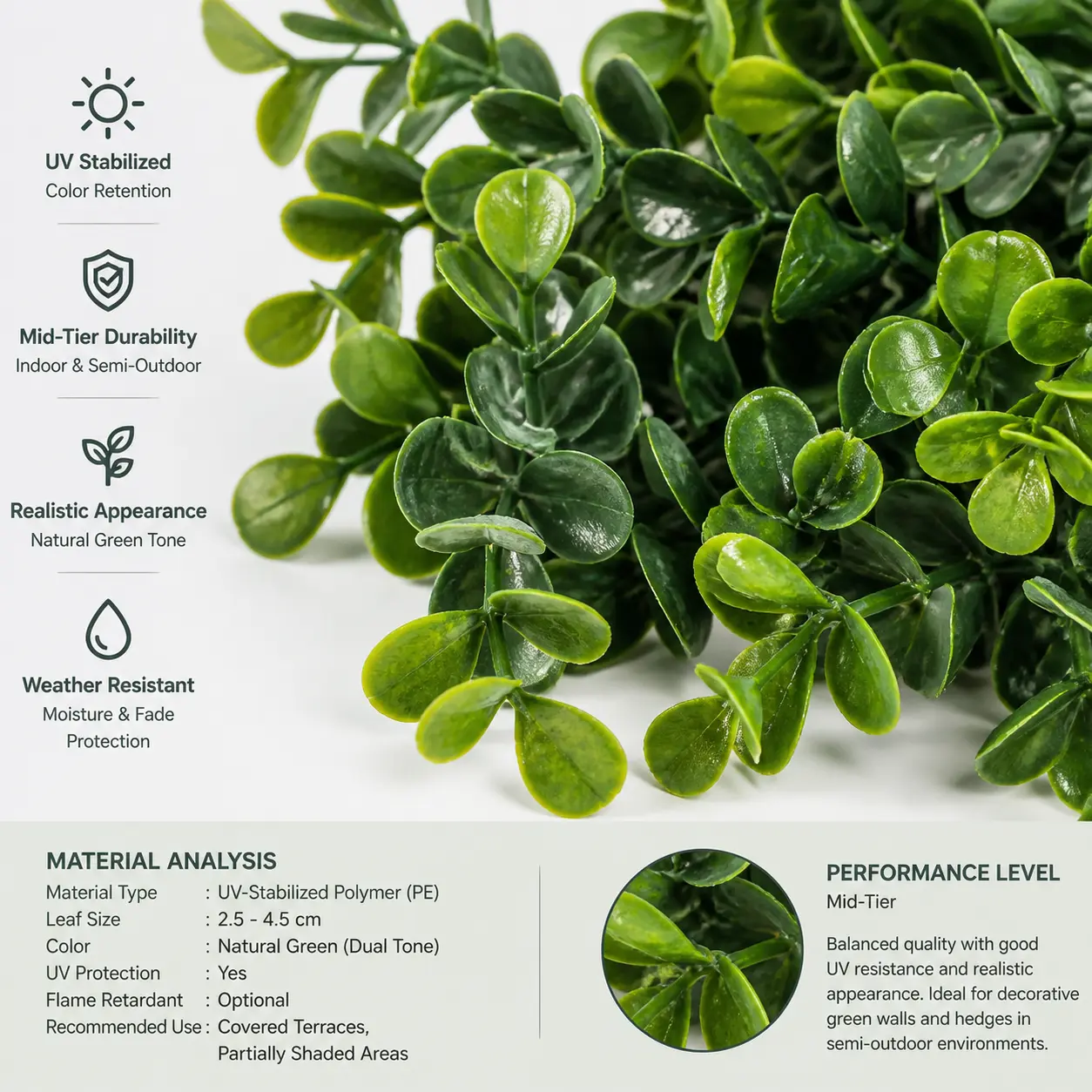
UV-stabilized polymer artificial plant material specification card showing UV stabilized color retention, mid-tier durability for indoor and semi-outdoor use, realistic natural green tone, and weather resistant fade protection — material type PE, recommended for covered terraces and partially shaded areas

UV-Treated Polymer

Polymer materials with surface UV coating. Good performance for 2–4 years depending on UV index of location. Suitable for covered terraces and partially shaded areas.

★★★★☆ 2–4 year lifespan
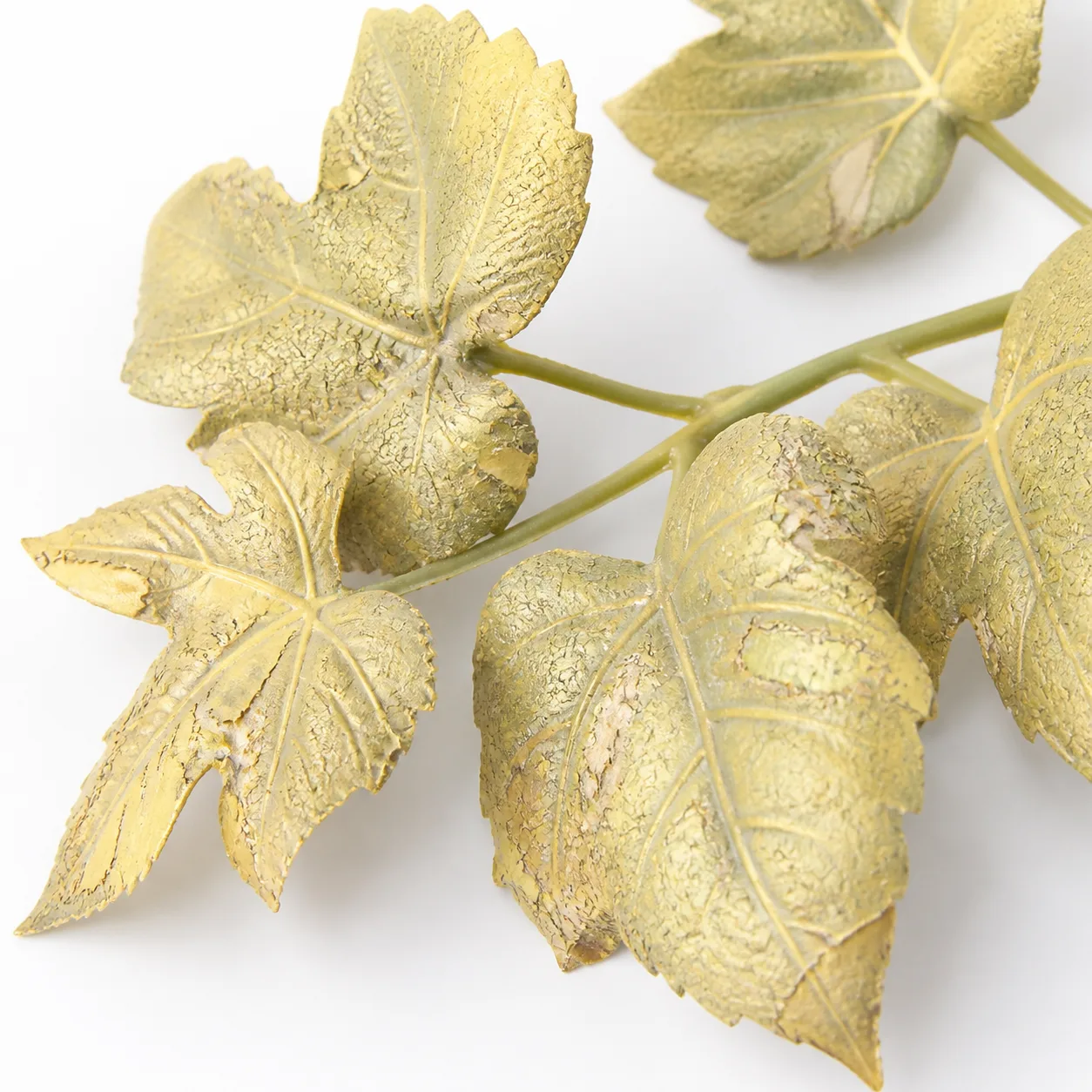
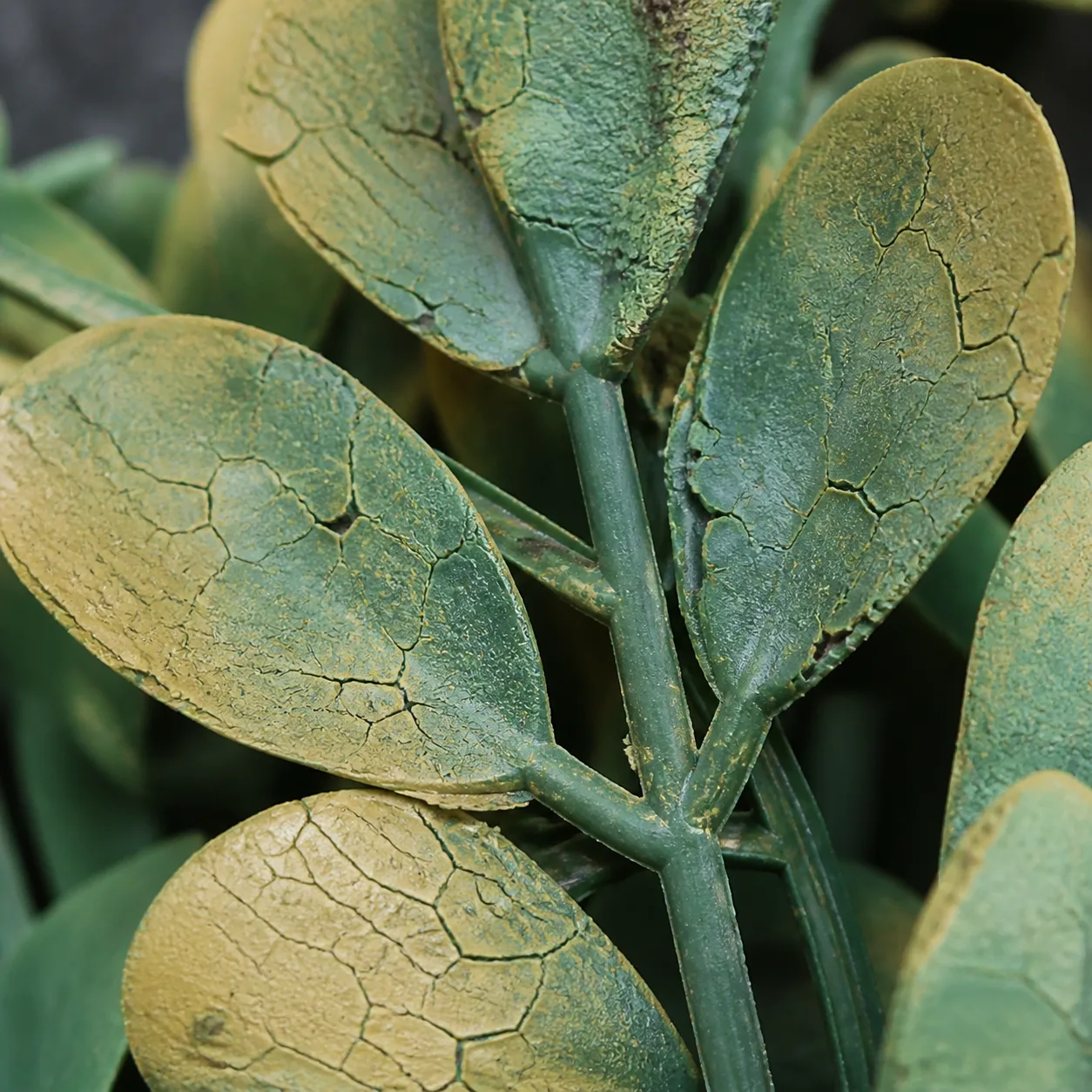
Close-up of UV-damaged standard plastic artificial plant leaves showing severe yellowing, surface cracking, and loss of structural integrity after sun exposure

Standard PVC / Plastic

No UV stabilization. Fading begins within months in direct sunlight. Becomes brittle and discolored within 12–18 months. Not recommended for any outdoor commercial installation.

★★☆☆☆ 12–18 month lifespan
Regional Impact

UV Exposure Varies Dramatically by Location

🔴 Extreme UV — Replace every 12–18 months without protection

Arizona, Florida, Middle East, Southeast Asia

UV index regularly exceeds 10. Only HDPE or UV-stabilized materials rated for extreme exposure. Standard plastics fail visibly within one season.

🟠 High UV — Standard plastic lasts <2 years

California, Texas, Mediterranean, Australia

UV index 7–9 common in summer months. UV-treated polymers perform adequately in shaded positions. Full sun requires HDPE grade material.

🟡 Moderate UV — Annual inspection recommended

Northern Europe, Pacific Northwest, Northern China

UV index 4–6 in peak summer. Seasonal variation is significant. UV-stabilized materials provide excellent multi-year performance with standard maintenance.

🌊 Coastal — UV + salt air combination

Beach Resorts, Marina Developments, Coastal Hotels

Salt air accelerates UV damage and causes additional surface degradation. Coastal installations require HDPE materials with corrosion-resistant hardware and more frequent cleaning.

Free Download

Get the Complete UV Protection Guide

Unlock our full guide including installation best practices, regional climate analysis, maintenance protocols, and ROI case studies with before/after visual evidence.

Your email is safe. We'll send occasional industry updates and resources.

✓ Unlocked — UV Protection Guide

Complete UV Protection Strategy

Print or save as PDF using the button below.

1 UV Damage Assessment

  • Understanding UV radiation by region: UV index above 6 (most sunbelt regions, Middle East, Southeast Asia) requires HDPE-grade material. UV index 3–5 allows UV-treated polymer for shaded positions.
  • Common failure points: Leaf tips and exposed upper surfaces fade first. Watch for color shift from green to yellow-green, then gray-green. Brittleness follows at the stem joints.
  • Cost of unprotected plants: A hotel pool area with 20 standard plastic plants will require full replacement every 12–18 months at an average cost of $3,000–$8,000. UV-protected plants last 5–8 years for a fraction of that.
  • Insurance angle: Some commercial property insurers note decorative item condition in premises assessments. Visibly deteriorated plantscaping can be flagged in general condition reports.
UV damage progression on artificial plant — yellow-bleached tips with green base showing classic tip-to-base fade from prolonged sun exposure

Tip-to-base fade pattern — unprotected plastic after less than 12 months of direct sun

2 Material Selection Visual Guide

  • HDPE vs Standard Plastics: HDPE contains UV stabilizers integrated into the polymer chain — not a surface coating. It resists both color fading and structural brittleness for 5+ years in direct sun.
  • UV-stabilized formulations: Look for ASA (Acrylonitrile Styrene Acrylate) or PE-UV grades. Avoid generic "plastic" or unspecified polymer materials for any outdoor installation.
  • Color fastness ratings: Ask suppliers for ISO 105-B02 light fastness ratings. Grade 4–5 minimum for covered outdoor use; grade 6–7 required for full sun commercial installation.
  • Warranty signal: A supplier confident in UV performance will offer a minimum 3-year warranty against fading. No warranty = no UV protection. LaySun offers 5-year UV warranty on all outdoor commercial products.
UV-protected HDPE artificial leaves — vibrant green, smooth surface, full flexibility retained after years of outdoor exposure
HDPE — color and flexibility intact after 3+ years
UV-damaged standard plastic artificial leaves showing severe surface cracking, yellowing, and brittleness — typical failure after 12–18 months of direct sun
Standard plastic — cracked and brittle after 18 months

3 Installation Best Practices

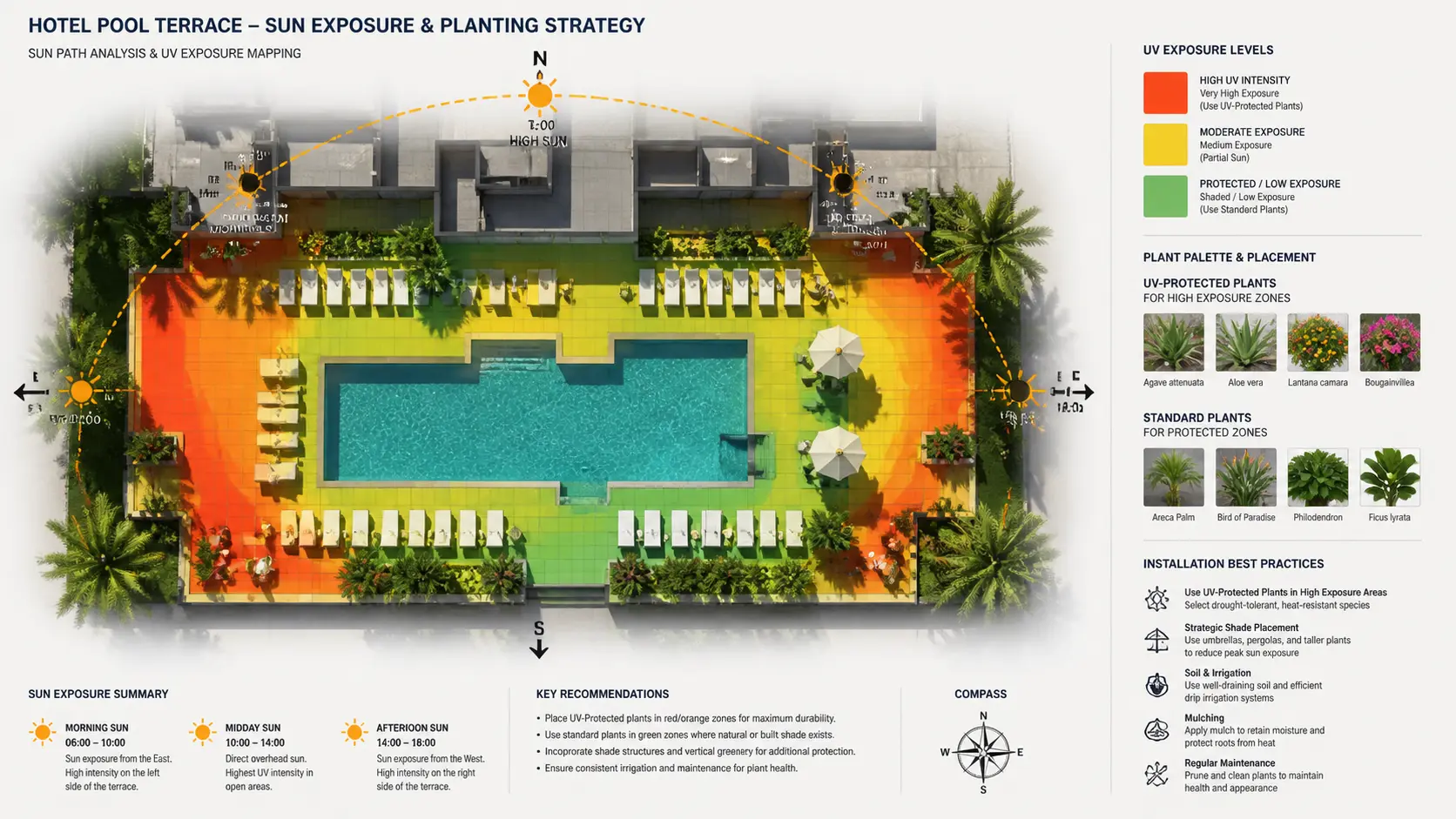
  • Sun exposure mapping: Before installation, track sun movement across the space for a full day. Note which positions receive 4+ hours of direct midday sun — these require HDPE-only products.
  • Strategic placement: Position the most UV-sensitive arrangements (flowering plants, lighter colors) in partially shaded areas. Use deep greens and HDPE foliage in full-sun positions.
  • Wind and weather factors: Wind accelerates surface degradation. Coastal and rooftop installations need corrosion-resistant hardware and more robust securing. UV + salt air = increased maintenance frequency.
  • Seasonal rotation strategy: For moderate-UV climates, quarterly 90° rotation of planters evens UV exposure and extends visual lifespan by 30–40%.
Hotel pool terrace sun exposure and planting strategy diagram — overhead sun path analysis showing high UV zones in red and orange, moderate in yellow, and shaded low-exposure areas in green, with UV-protected plant placement recommendations

Sun exposure mapping for a hotel pool terrace — red/orange zones require UV-protected HDPE plants

4 Maintenance Protocol

Frequency Task What to Check
Weekly Surface dusting and visual inspection Dust accumulation, any visible damage, secure fixings
Monthly Rotation (if in planters) + wet wipe Early color shift on most-exposed surfaces, stem joint flexibility
Quarterly Professional clean + condition report Color uniformity, leaf attachment, hardware corrosion, UV degradation signs
Annual Full assessment + replacement planning Compare against installation photos, document any fading, plan replacements before visible deterioration

5 Regional Climate Analysis

  • High UV regions (Arizona, Florida, UAE, Southeast Asia): Only HDPE or ASA materials. Quarterly professional cleaning mandatory. Expect 5–8 year lifespan with proper maintenance vs 12–18 months for standard plastic.
  • Moderate UV (California, Texas, Mediterranean, Southeast China): HDPE for full sun; UV-stabilized polymer acceptable for shaded positions. Semi-annual professional clean sufficient.
  • Northern/Seasonal climates (Northern Europe, Pacific Northwest, Northern China): UV-stabilized materials perform excellently. Frost and freeze-thaw cycles matter more than UV in these zones — check freeze ratings alongside UV ratings.
  • Coastal environments (beach resorts, marina developments, waterfront hotels): Salt air creates unique challenges. Rinse monthly with fresh water. Hardware must be stainless or powder-coated aluminum. HDPE material essential — salt accelerates degradation of lesser materials.

6 Case Studies & ROI

Hotel Pool Area — Arizona

5-Year Lifespan vs Annual Replacement

Switched from standard plastic (replaced every 14 months, $6,200/cycle) to LaySun HDPE ($14,800 installed). By year 3, net saving: $3,800. By year 5: $16,200 cumulative saving. Plants still in excellent condition at installation's 5-year anniversary.

Restaurant Patio — Florida

70% Reduction in Replacement Costs

Chain of 8 restaurant patios previously replaced patio plants every summer (avg $1,800/location/year = $14,400/year chain-wide). After switching to UV-protected HDPE: $1,200/year total for all 8 locations for cleaning only. Annual saving: $13,200.

Office Atrium — Southern California

Maintained Aesthetic Appeal for 3+ Years

Facility management team documented quarterly photo comparisons. At 36 months, color matched installation photos within 5% variance. No maintenance complaints from building tenants — previously received 2–3 complaints/year about faded plants.

Shopping Mall — Dubai

Eliminated Seasonal Color Fading Issues

Exterior mall atrium with retractable roof — partial shade, high UV. Previous standard plants faded visibly by end of first summer. LaySun HDPE outdoor range installed across 3 exterior zones. No visible fading after 2 years. Zero replacement cost in that period vs AED 85,000/year previously.

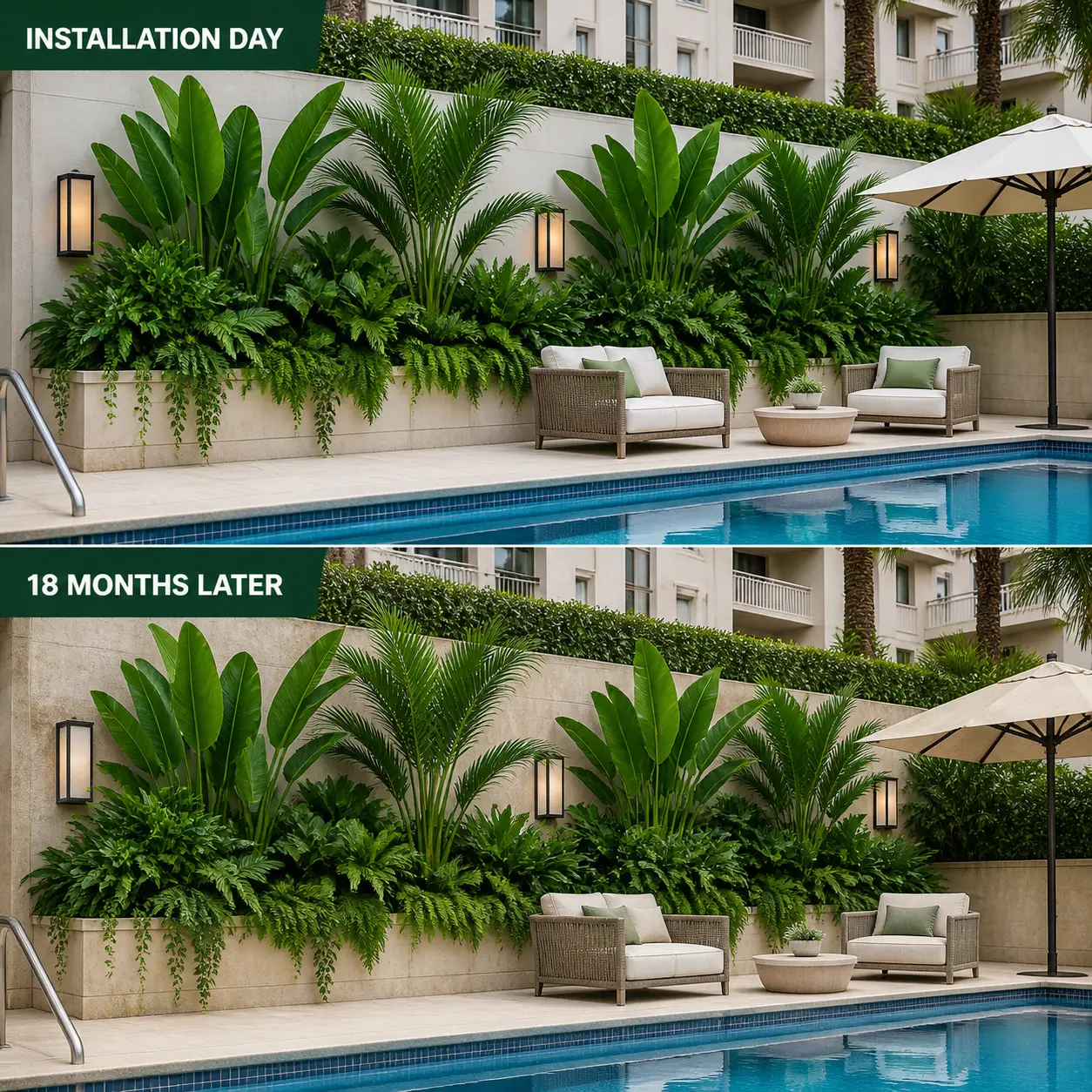
Hotel pool area before and after comparison — Installation Day showing lush green tropical artificial plants, versus 18 months later with plants maintaining full color and density using LaySun UV-protected HDPE
Hotel pool — installation day vs 18 months later
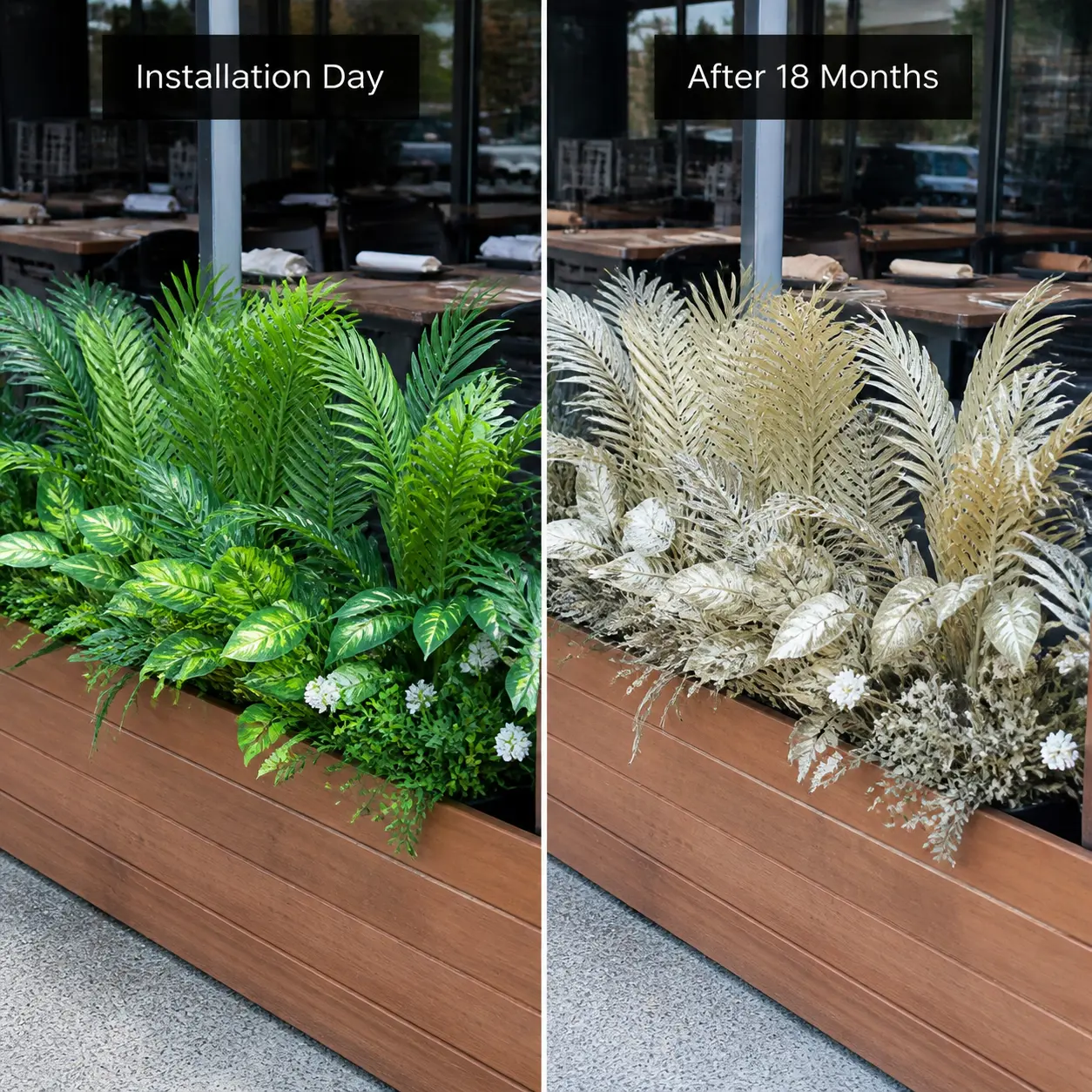
Restaurant patio planter before and after comparison — vibrant green artificial plants on installation day versus completely bleached, faded white and gold foliage after 18 months of UV exposure on standard plastic
Restaurant patio — standard plastic faded to white in 18 months